
Deck, Fence, or Patio First? Best Project Order in Ontario
Should you build your deck, fence, or patio first? Learn the optimal project order for Ontario builds, permit timing, and cost savings in KWC.
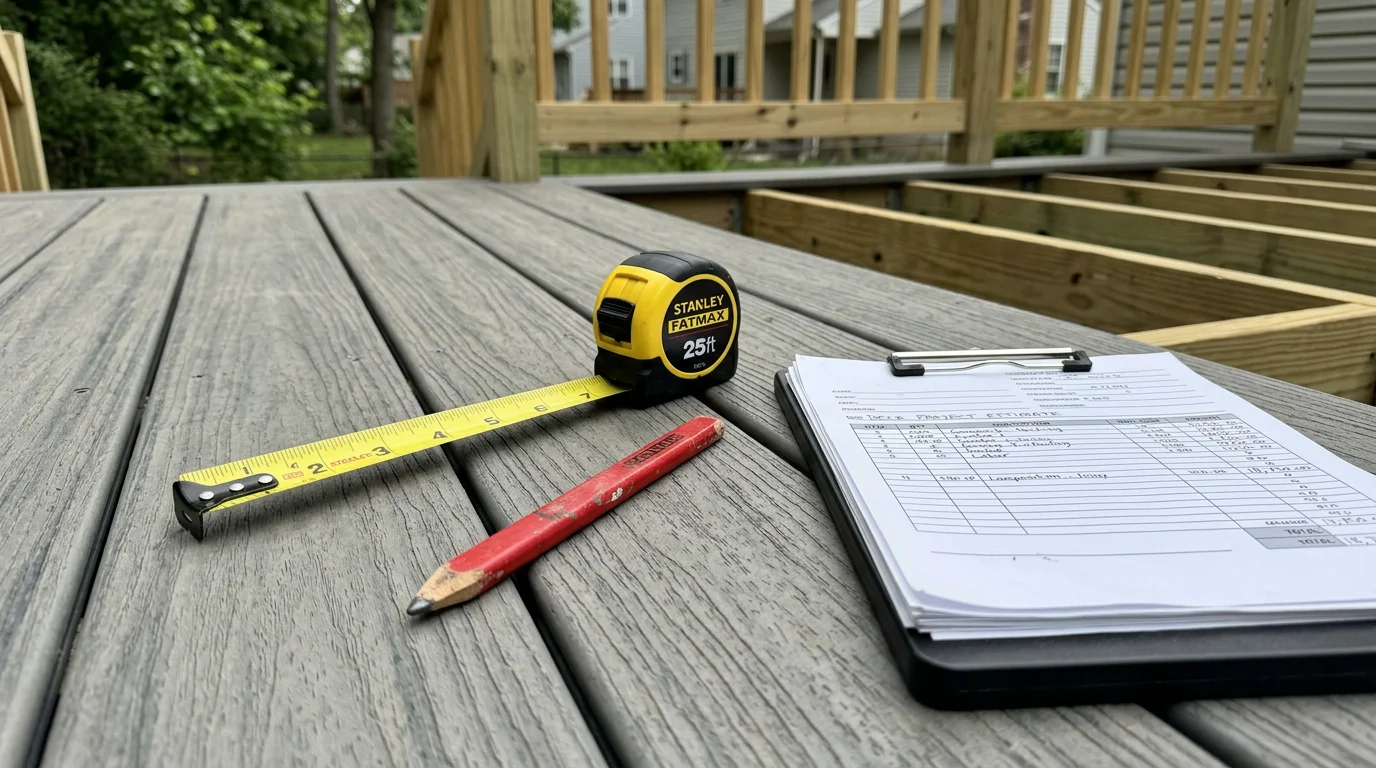
You're planning multiple backyard projects and wondering which one to tackle first. Build in the wrong order and you'll damage finished work, create access problems, or trigger extra permit inspections. Here's the optimal sequence for Ontario homeowners and why it matters.
The Standard Build Order: Grade, Deck, Fence, Patio
For most Ontario properties, this sequence minimizes rework and maximizes efficiency:
🏗️ Planning a deck project?
Get a free manual project review, or visualize your dream deck with AI before requesting quotes.
1. Grading and drainage (if needed)
2. Deck construction
3. Fence installation
4. Patio or interlock
This order works because heavy equipment needs clear access, structural work shouldn't be blocked by fencing, and final landscaping happens last to avoid damage from construction traffic.
Why Deck Before Fence
Building your deck first gives you three major advantages:
Access for equipment and materials. Deck builders need room for bobcats, concrete trucks (for footings), lumber deliveries, and excavation equipment. A fence blocks rear yard access and forces materials through your house or side yard—if that's even possible. On narrow city lots in Kitchener or Waterloo, you may have no side access at all.
Proper setback planning. Your deck setback requirements determine where it sits on your property. Once the deck location is finalized, you can plan fence placement around it without guessing. If you fence first and discover the deck needs to shift during permit review, you're moving fence posts.
Reduced damage risk. Deck construction involves heavy materials, power tools, and foot traffic. Concrete splashes, dropped lumber, and equipment travel will destroy new fence boards and posts. Build the deck first and your fence stays pristine.
Exception: Boundary Disputes
If you're in an active property line dispute or need to establish legal boundaries before building, fence first. Get a surveyor to mark corners, install the fence on your confirmed property line, then build the deck within your remaining setback allowance.
Why Fence Before Patio
Once your deck is complete, install fencing before any ground-level hardscaping:
Equipment access again matters. Fence post installation requires an auger or manual digging, concrete delivery for post footings, and room to maneuver 8-foot posts and panels. Finished interlock or poured patios limit where you can work and drive stakes.
Patio edge planning. Your fence setback determines how close your patio can extend to the rear boundary. If you pour the patio first and place it too close to the line, fence posts may land in your finished stone or concrete.
Protection during grading. Patio bases require compacted granular stone and precise grading. Fence installation involves digging, moving soil, and leveling posts—all activities that disrupt patio base prep. Do the disruptive work first.
Ontario freeze-thaw considerations. Fence posts in Ontario need to go 4 feet deep minimum below grade to sit below the frost line. That's deep digging that can shift nearby patio edges if the patio is already laid. Stabilize the perimeter first, then build inward.
When to Reverse the Order
Some property conditions flip the standard sequence:
Build Fence First If:
- Your lot has rear lane access. If materials and equipment can enter from an alley or rear easement, the fence doesn't block access. You can fence the sides, then bring deck materials in from the back.
- You're doing the work in phases over multiple years. If you need privacy now but won't build the deck until next season, go ahead and fence. Just leave a 10-12 foot gate opening where equipment will enter later.
- Your deck is a small front porch or platform. Small decks under 200 sq ft with no equipment needs can happen anytime. The "deck first" rule applies to full-size rear yard decks requiring excavation and concrete.
- You're building a ground-level deck (no footings). Floating decks that sit on precast blocks need minimal equipment and no concrete trucks. You can install the fence first without access issues.
Build Patio First If:
- The patio is far from the deck and fence location. If you're adding a fire pit patio in a corner of the yard away from construction zones, sequence doesn't matter. Just keep heavy equipment off finished areas.
- You're using the patio as a staging area. Some contractors pour a concrete pad first and use it to stage materials during deck construction. This only works if the patio location won't interfere with deck access.
Permit Timing and Inspections
Ontario permits affect your build order because each permit triggers separate inspections:
- Deck permits in Kitchener, Waterloo, and Cambridge require footing inspection before you pour concrete, and framing inspection before decking. Expect 2-4 weeks processing time plus inspection delays.
- Fence permits are required in most KWC municipalities if your fence exceeds 4 feet in the front yard or 6 feet in the rear. Permit fees run $50-200 depending on the city. Processing is typically faster than deck permits (1-2 weeks).
- Patio permits usually aren't required for ground-level interlock or stone patios. Poured concrete patios may trigger a permit if they're considered a structure or if they include footings.
Optimal permit strategy: Apply for your deck permit first since it has the longest approval timeline. While waiting, finalize fence plans. Once the deck passes final inspection, apply for the fence permit (if needed). Patios rarely need permits, so you can start them whenever access and grading are ready.
Overlapping Construction
If you're hiring different contractors for each project, coordinate start dates carefully:
- Finish the deck completely—including final inspection and staining—before the fence crew arrives
- Finish the fence before interlock crews deliver base stone and pavers
- Leave 2-3 weeks between projects to allow for inspections, material delivery delays, and weather
Trying to overlap projects to save time usually backfires. You'll have crews working around each other, materials blocking access, and finished work getting damaged.
Cost Implications of Build Order
Building in the wrong sequence can cost you:
Fence repair after deck construction: If you install a fence first and deck crews damage it, you're paying for board replacement, post repairs, or full panel sections. Budget $300-800 for typical damage repairs, more if equipment strikes posts and requires re-setting.
Patio re-leveling after fence work: Digging 4-foot-deep postholes near a finished patio can cause settling and edge displacement. Re-leveling interlock costs $800-1,500 depending on affected area.
Extra material delivery fees: Bringing deck lumber through your house because the yard is fenced costs $200-500 in additional labor and handling. Some contractors refuse interior carry-through entirely.
Delayed inspections: If your deck framing is blocked by a fence and the inspector can't access all sides, you'll fail and pay for a re-inspection ($100-200). Moving fence sections temporarily wastes time and money.
Real Project Example: Typical KWC Backyard
Here's how the sequence works for a common Kitchener scenario:
Property: 40-foot-wide lot, 120-foot depth, rear yard accessed via 4-foot side gate
Projects: 12x16 elevated deck, 100 linear feet of 6-foot privacy fence, 10x12 interlock patio
Phase 1: Deck (Weeks 1-4)
- Apply for deck permit (Week 1)
- Approval comes back (Week 3)
- Excavate and pour footings, pass footing inspection (Week 4)
- Frame deck, install joists, pass framing inspection (Week 5)
- Install decking and railing (Week 6)
- Final inspection and staining (Week 7)
Materials entered through side gate. Bobcat dug footing holes. Concrete truck accessed rear yard via side yard.
Phase 2: Fence (Weeks 8-9)
- Applied for fence permit while deck was under construction (Week 5)
- Fence permit approved (Week 7)
- Install posts and panels (Week 8-9)
- Deck is complete and protected
Equipment accessed through same side gate. Auger dug postholes. Fence placed 2 feet from property line per setback rules.
Phase 3: Patio (Weeks 10-11)
- No permit required for interlock
- Excavate patio base, compact granular stone (Week 10)
- Lay pavers and edge restraint (Week 11)
- Deck and fence fully protected during excavation
Total timeline: 11 weeks from first permit application to finished patio. Zero rework or damage.
If Built in Wrong Order:
Building fence first would have required either:
- Removing a 10-foot fence section for equipment access, then re-installing it ($400-700 extra)
- Carrying all deck materials through the house ($300-500 labor premium, assuming the contractor agrees)
- Repairing fence damage from construction traffic ($300-800)
Building patio first would have risked edge displacement when digging fence postholes near the patio perimeter.
Working With Contractors
Most experienced Ontario deck guides and fence contractors will tell you the right sequence. But if you're coordinating separate trades, communicate the plan clearly:
Questions to ask your deck builder:
- How will materials access the site?
- Do you need equipment in the rear yard?
- When can I start the fence without interfering?
Questions to ask your fence installer:
- How close to the property line will posts go?
- Will digging near the patio edge cause settling?
- Can you work around the finished deck safely?
Questions to ask your interlock contractor:
- Do you need equipment access to the rear yard?
- Will base stone delivery damage the deck or fence?
- How much clearance do you need from existing structures?
Get written confirmation that your sequencing plan works for everyone. If a contractor raises concerns, adjust the order before starting.
DIY Considerations
Planning to do the work yourself? Follow the same sequence, but factor in your own timeline:
- Deck construction takes most DIYers 3-6 weekends depending on size and complexity
- Fence installation takes 2-4 weekends for 100 linear feet
- Patio installation takes 2-3 weekends for interlock, longer for natural stone
Space projects at least a month apart so you're not rushing one to start the next. And remember: Ontario Building Code still applies to DIY decks. You need permits and inspections just like a contractor does.
🎨 Not sure which material to pick?
Upload a photo of your backyard and see exactly how Trex, TimberTech, or cedar would look — free and instant.
Common Questions
Can I build a deck and fence at the same time?
Technically yes, but it's inefficient. You'll have two crews, overlapping material deliveries, and access conflicts. If you're hiring the same company for both, they may build the deck foundation and framing, pause to install the fence, then return to finish the deck. That works if they plan it carefully, but most contractors prefer to complete one project fully before starting the next.
Do I need separate permits for a deck and fence?
Yes. In Kitchener, Waterloo, and Cambridge, decks and fences are separate permit applications with separate fees. Your deck permit covers the deck structure only—railings, stairs, and footings. The fence is a distinct structure requiring its own review and approval. Apply for both, but stagger construction as described above.
What if I want to build a privacy fence right at the deck edge?
This is common—a fence forms one side of the deck for privacy. In this case, build the deck first, including any posts that will later connect to the fence. Once the deck passes inspection, install the fence panels. They can attach to deck posts if your design includes that, or run independently behind the deck. Either way, deck structure comes first, fence panels after.
How does Ontario winter affect build order?
Plan your projects for May through September for best results. Decks require concrete footings, which shouldn't be poured below 5°C. Fence posts also need concrete, though some installers use gravel bases that work year-round. Interlock can technically happen in cool weather, but ground must not be frozen. If you're building across two seasons, pause after the deck and resume with fence and patio the following spring. Read more about seasonal timing for Ontario decks.
Can I build a ground-level deck after the fence?
Yes. Ground-level decks that sit on precast blocks or floating deck footings don't require concrete trucks or heavy excavation. You can carry materials through a gate and assemble the deck in place. This exception applies to decks under 200 sq ft that sit less than 24 inches above grade (which may not require a permit in some KWC municipalities—check locally).
Should I install deck lighting before or after the fence?
Install your deck lighting during deck construction, but wait to run wiring to fence-mounted fixtures until after the fence is up. If your lighting plan includes post cap lights on fence posts, coordinate with your fence installer so they leave wire chases or install compatible post caps. Low-voltage lighting usually doesn't require a permit, but line-voltage (120V) systems do in Ontario.
Upload a backyard photo and preview real decking materials with AI — free, instant, no sign-up.
Permits, costs, material comparisons, and questions to ask before requesting quotes — delivered to your inbox.