
Black Composite Decking in Canada: Best Options and Brands
Black composite decking in Canada: best brands, heat performance, pricing, and installation tips for Ontario homeowners building modern outdoor spaces.
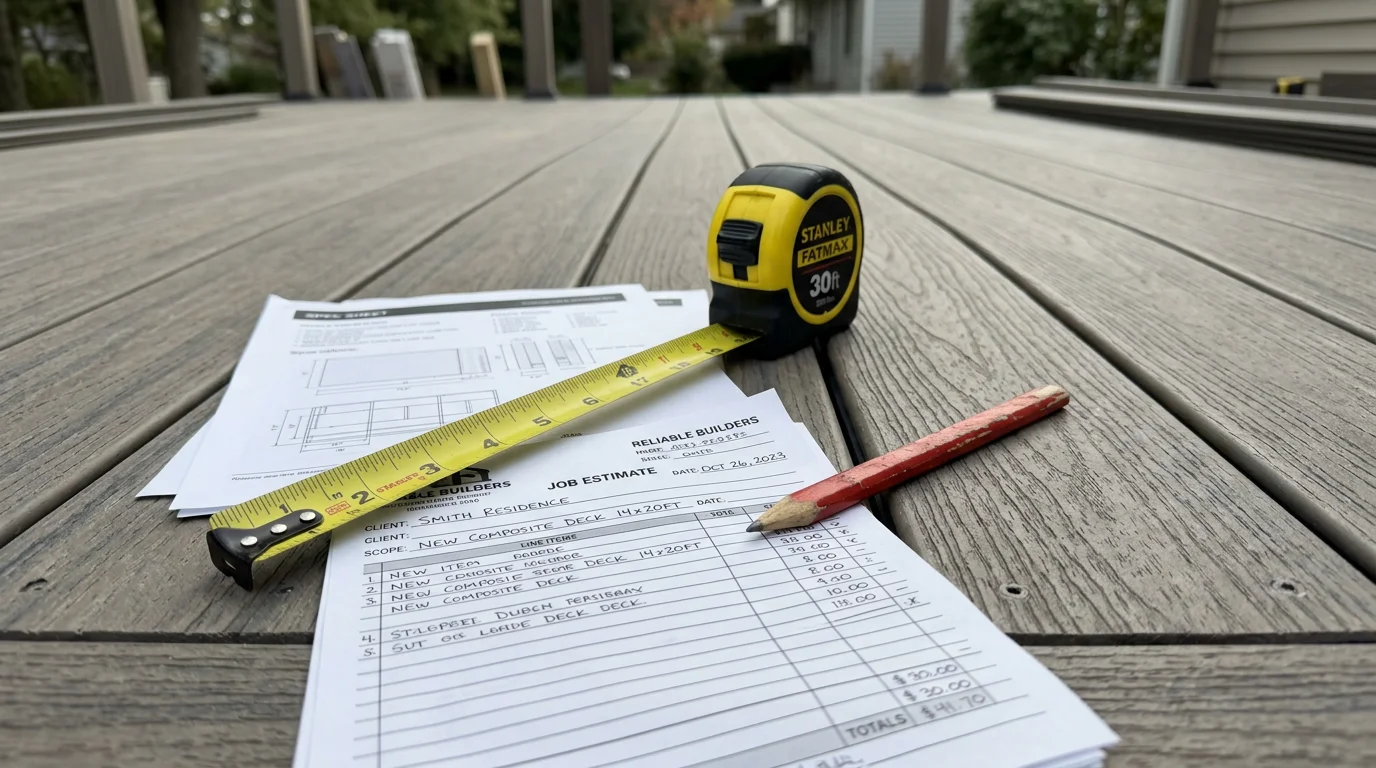
Black composite decking creates a striking, modern look that makes outdoor furniture and landscaping pop. But in Canada's climate, darker boards absorb more heat and expand more than lighter colours. You need to know which brands perform best, how much hotter black gets than grey, and what installation adjustments prevent warping.
Why Black Composite Decking Is Popular in Canada
Black decking delivers a contemporary aesthetic that's hard to match. It creates clean visual lines, hides dirt and debris better than lighter colours, and makes a bold statement. In Kitchener-Waterloo-Cambridge, homeowners building sleek outdoor spaces pair black decking with stainless steel cable railings or horizontal slat privacy screens for a high-end look.
🏗️ Planning a deck project?
Get a free manual project review, or visualize your dream deck with AI before requesting quotes.
The trade-off: black boards can reach 60-80°F (33-44°C) hotter than lighter colours on sunny summer days. That means bare feet get uncomfortable around 2-6 PM in July and August. If your deck gets full sun exposure, you'll want outdoor rugs in high-traffic areas or you'll be wearing sandals outdoors.
Thermal expansion also matters. Black boards expand and contract more than grey or tan options. You need to follow manufacturer spacing requirements precisely—typically 3-4mm gaps for black, versus 2-3mm for lighter shades—or boards will buckle when temperatures climb.
Best Black Composite Decking Brands Available in Canada
Trex Enhance in Clam Shell or Trex Select in Pebble Grey
Trex doesn't offer a true black, but Clam Shell (dark charcoal) and Pebble Grey come close. These boards use Trex's capped polymer shell for stain and fade resistance.
- Price: $8-12/sqft material only; $65-85/sqft installed in KWC
- Warranty: 25-year residential stain and fade coverage
- Heat performance: Mid-range; still hot but 10-15°F cooler than true black
- Availability: Wide distribution across Ontario—Home Depot, Lowe's, and specialty dealers
Trex boards have aggressive wood-grain texture that hides scratches well. The brand's heat-mitigating technology (HMT) reduces surface temperature slightly compared to older composite formulas. Read more about Trex decking costs and warranty details.
TimberTech AZEK Vintage in Mahogany or Coastline
TimberTech AZEK (fully capped PVC, not wood-composite) offers Vintage Mahogany, a near-black brown, and Coastline, a dark grey.
- Price: $10-14/sqft material only; $75-95/sqft installed
- Warranty: 30-year fade and stain, 50-year limited structural
- Heat performance: PVC runs cooler than wood-composite; expect 5-10°F less heat than comparable wood-composite blacks
- Availability: Select dealers only—check TimberTech's dealer locator for KWC suppliers
AZEK boards are 100% synthetic (no wood flour), so they resist moisture absorption better than wood-composite options. This makes them ideal for pool decks or areas with poor drainage. The material costs more upfront but you'll never deal with mold staining.
Fiberon Horizon in Castle Grey or Paramount in Cinnabar
Fiberon's Castle Grey (Horizon line) is a deep charcoal, while Cinnabar (Paramount line) is a dark chocolate brown.
- Price: $7-11/sqft material only; $60-80/sqft installed
- Warranty: 25-year stain and fade
- Heat performance: Standard; no special heat-reduction tech
- Availability: Growing in Canada; check Fiberon dealers in Kitchener-Waterloo
Fiberon boards use PermaTech capping for scratch resistance. The Horizon line has subtle grain patterns; Paramount features more pronounced wood texture. Both lines perform well in freeze-thaw cycles common in Ontario winters.
Canadian-Made Options: Veranda, MoistureShield
If buying Canadian-made matters, Veranda (manufactured in Quebec) and MoistureShield (some lines made in Ontario) offer dark grey and brown options, though not true black.
- Price: $6-9/sqft material only; $55-75/sqft installed
- Warranty: 20-25 years depending on line
- Heat performance: Comparable to Trex and Fiberon
- Availability: Home Depot (Veranda), specialty dealers (MoistureShield)
These brands cost less than premium imports but still deliver solid performance. Check composite decking made in Canada for full brand details.
How Hot Does Black Composite Decking Get in Ontario Summers?
Expect black or dark brown composite decking to reach 140-160°F (60-71°C) on sunny July afternoons in KWC. That's hot enough to cause discomfort in 3-5 seconds of bare-foot contact.
Factors that influence surface temperature:
- Sun exposure: Full sun all day = maximum heat; partial shade drops temps 15-25°F
- Board colour: True black hits peak temps; dark greys run 10-15°F cooler
- Material type: PVC (AZEK) runs cooler than wood-composite (Trex, Fiberon)
- Ventilation: Elevated decks with airflow underneath stay 5-10°F cooler than low-to-ground builds
Mitigation strategies:
- Install outdoor rugs in high-traffic zones (near doors, seating areas)
- Choose dark grey instead of true black if barefoot use matters
- Add pergola or shade sails over main gathering spaces
- Run deck boards perpendicular to sun angle to maximize shadow lines between boards
If you're building a pool deck in Ontario, lighter colours make more sense for barefoot safety.
Installation Considerations for Black Composite Decking in Canada
Gapping Requirements
Black boards expand more than light colours. Follow manufacturer specs exactly—typically:
- 3-4mm end-to-end gaps (where board ends meet over joists)
- 3-4mm side-to-side gaps (between adjacent boards)
- 6-8mm gaps at fixed objects (posts, house walls, railings)
Use proper spacing tools during installation. Boards installed too tight will buckle when summer heat causes expansion. This is especially critical in KWC, where daily temperature swings can hit 30-40°F (17-22°C) in spring and fall.
Joist Spacing and Framing
Dark boards show sag and deflection more than lighter colours. Stick to 12-inch joist spacing on-center for most composite brands, or 16-inch if manufacturer data specifically allows it for your chosen product.
Black decking looks best with hidden fasteners (Trex Hideaway, Fiberon Phantom, TimberTech CONCEALoc). Exposed screws on black boards create visual clutter that defeats the sleek aesthetic. Budget an extra $1.50-2.50/sqft for hidden fastener systems.
See deck joist span tables for Ontario builds to confirm your framing meets code.
Rim Joist and Fascia Colour Matching
Black decking pairs well with black PVC fascia boards, but exact colour matching between brands is tough. Trex Clam Shell fascia won't perfectly match Fiberon Castle Grey decking. If you want seamless colour flow, buy fascia and decking from the same product line.
Alternatively, use contrasting fascia—black decking with white or grey PVC trim creates a crisp two-tone look. This approach gives you flexibility to mix brands and often costs less than buying premium colour-matched fascia.
Cost Breakdown: Black Composite Decking in KWC (2026)
Material Costs
| Brand | Colour | Material Price/sqft | Installed Price/sqft |
|-------|--------|---------------------|----------------------|
| Trex Enhance | Clam Shell | $8-12 | $65-85 |
| TimberTech AZEK | Vintage Mahogany | $10-14 | $75-95 |
| Fiberon Horizon | Castle Grey | $7-11 | $60-80 |
| Veranda | Dark Grey | $6-9 | $55-75 |
Installed pricing includes framing, labour, hidden fasteners, and basic stairs. Add $40-120/linear foot for composite or metal railing systems.
Premium Add-Ons
- Hidden fasteners: +$1.50-2.50/sqft
- Colour-matched fascia: +$3-6/linear foot
- Deck lighting (low-voltage LED): $15-40/fixture installed
- Privacy screens (horizontal slat): $80-150/linear foot installed
- Pergola (pressure-treated frame): $2,500-6,000 for 10x12 structure
For a 300 sqft black composite deck with hidden fasteners, basic stairs, and 24 linear feet of railing:
- Material only: $2,700-4,200
- Fully installed: $19,500-28,500
Check composite deck costs in Waterloo for detailed pricing breakdowns.
Black Decking vs Other Dark Colours: Heat and Fade Comparison
True Black vs Dark Grey
- True black: Highest heat absorption, reaches 155-160°F in full sun
- Dark grey (charcoal): 10-15°F cooler, still delivers modern aesthetic
- Fade risk: Both fade similarly over 10-15 years; capped boards hold colour best
If barefoot use matters but you want a dark look, choose dark grey over black.
Dark Brown vs Black
- Dark brown (walnut, mahogany): Slightly cooler than black, more wood-like appearance
- Visual impact: Less striking contrast; doesn't hide dirt as well as true black
- Traditional fit: Works better if your home has wood siding or rustic landscaping
Brown tones blend with natural surroundings; black creates intentional contrast.
Bi-Tone and Variegated Dark Boards
Some composite lines offer bi-tone blacks and greys (lighter and darker streaks within each board). These options:
- Hide dirt, scratches, and fading better than solid colours
- Reduce visual monotony on large deck surfaces
- Cost the same as solid-colour alternatives
Trex Transcend and TimberTech AZEK Vintage lines feature realistic variegation.
Maintenance: Keeping Black Composite Decking Clean in Ontario
Black decking shows pollen, dust, and leaf stains more than lighter colours. Plan to wash your deck 2-3 times per season to maintain appearance.
Routine Cleaning
- Spring: Power wash after winter salt and debris (1,500 PSI max, 40° fan tip)
- Summer: Hose down monthly; scrub tough stains with composite deck cleaner
- Fall: Clear leaves weekly; tannins stain black boards faster than light colours
- Winter: Sweep snow with plastic shovel; avoid metal edges that scratch
Use composite-safe cleaners only—never bleach or harsh chemicals that damage capping. Brands like DeckWise or Trex-branded cleaners work well.
See composite deck maintenance for Ontario for seasonal care schedules.
Scratch and Scuff Repair
Black decking shows scratches as light-coloured streaks. Minor scratches often disappear with:
- Heat treatment: Carefully apply heat gun (low setting) to blend scratches
- Colour-matched markers: Touch-up pens from deck manufacturers
- Gentle sanding: 220-grit sandpaper followed by heat gun on PVC boards
Deep gouges can't be repaired—replace damaged boards if appearance matters.
Permits and Code for Black Composite Decking in KWC
Composite decking doesn't change permit requirements, but installation details matter for inspections.
When You Need a Permit
- Decks 24 inches or higher above grade (measured at any point)
- Attached to your house (ledger board connection)
- Over certain square footage (varies by municipality)
Check deck permit requirements in Kitchener, Waterloo, or Cambridge for local rules.
Inspection Points for Composite Decks
Inspectors check:
- Joist spacing: Must match manufacturer specs and OBC requirements
- Ledger board attachment: Proper flashing, fastener spacing, connection to structure
- Footing depth: Minimum 48 inches (1.2 m) below grade to reach frost line
- Railing height and spacing: 36-42 inches high, balusters spaced under 4 inches
Black decking uses the same framing and footings as any composite deck. See deck framing inspection requirements for what to expect.
Is Black Composite Decking Worth It for Your Ontario Home?
Black composite makes sense if:
- You want a modern, high-contrast look
- You're okay wearing sandals or using rugs on hot days
- You'll keep up with regular cleaning to maintain appearance
- You're pairing it with contemporary railing (cable, glass, horizontal slat)
Skip black decking if:
- Your deck gets full sun and barefoot use is a priority
- You prefer low-maintenance "set and forget" outdoor spaces
- Your home style is traditional, cottage, or rustic
- You're on a tight budget (lighter colours cost the same but show dirt less)
For most KWC homeowners, dark grey or charcoal composite offers 90% of the visual impact with better heat performance and easier maintenance than true black.
When you're ready to move forward, request quotes from 3-4 local builders. Provide your preferred brand and colour, deck dimensions, and any add-ons. See how to measure your deck for accurate quotes and what to include in your quote request.
🎨 Not sure which material to pick?
Upload a photo of your backyard and see exactly how Trex, TimberTech, or cedar would look — free and instant.
Common Questions
Can you install black composite decking yourself in Ontario?
Yes, if you're comfortable with carpentry and willing to pull a permit. DIY installation saves $25-45/sqft in labour but requires precision with gapping, hidden fasteners, and ledger board attachment. Mistakes on black decking show more than on lighter colours—misaligned gaps or uneven boards create visible lines. First-time builders should practice with a small section before tackling the whole deck. You'll still need to follow Ontario Building Code footing depth requirements and pass inspections.
Does black composite decking fade faster than other colours?
All composite decking fades over 10-15 years, but black boards show fade as a lightening to charcoal grey. Capped composites (Trex Transcend, TimberTech AZEK) resist fading better than uncapped boards. Expect 5-10% colour shift in the first two years as UV exposure stabilizes pigments, then slower gradual fade. North-facing decks and shaded areas fade less than south-facing full-sun installations. Premium brands with 25-30 year fade warranties perform best, but even budget lines meet their warranty claims if you follow cleaning guidelines.
What's the best black composite decking for a hot tub in Ontario?
Choose TimberTech AZEK or another fully capped PVC composite for hot tub installations. PVC resists moisture absorption better than wood-composite options, preventing warping and mold under constant water exposure. Black isn't ideal for hot tub surrounds—the surface gets too hot to walk on barefoot when exiting the tub on sunny days. Consider dark grey instead, or install non-slip outdoor tiles in the 3-foot zone around the tub. You'll also need to verify your deck framing supports the hot tub's loaded weight—typically 80-100 pounds per square foot—and get engineered drawings for your permit. See hot tub structural requirements for Ontario decks.
How do you stop black composite decking from getting too hot?
Install partial shade structures like pergolas or shade sails over seating and high-traffic areas. Position outdoor rugs where people walk barefoot—near doorways, stairs, and seating zones. Choose dark grey over true black to reduce peak temperatures by 10-15°F. If your deck faces south or west with no tree cover, black may not be practical for summer use. You can also add deck lighting and use your outdoor space primarily during evening hours when surface temps drop to comfortable levels. Some homeowners install outdoor misters or hose down the deck before gatherings to cool surfaces temporarily.
Is black composite decking slippery when wet in Ontario winters?
Black composite has the same slip resistance as lighter colours from the same product line. Textured or embossed boards (like Trex Enhance or TimberTech Terrain) provide better traction than smooth boards, especially when wet or icy. Dark colours hide ice better than light boards, which creates a safety risk—you can't see frozen patches as easily. Apply non-slip traction tape on stairs and high-traffic areas if winter use is important. Clear snow promptly and use calcium chloride ice melt (not rock salt, which can stain composite). Most Ontario homeowners avoid composite decks in winter entirely—the material stays slippery until snow and ice fully melt.
Upload a backyard photo and preview real decking materials with AI — free, instant, no sign-up.
Permits, costs, material comparisons, and questions to ask before requesting quotes — delivered to your inbox.