
How Long Does a Composite Deck Last in Ontario?
Composite decks in Ontario last 25-50 years with minimal maintenance. Learn how freeze-thaw cycles, brands, and care affect lifespan in KWC's climate.
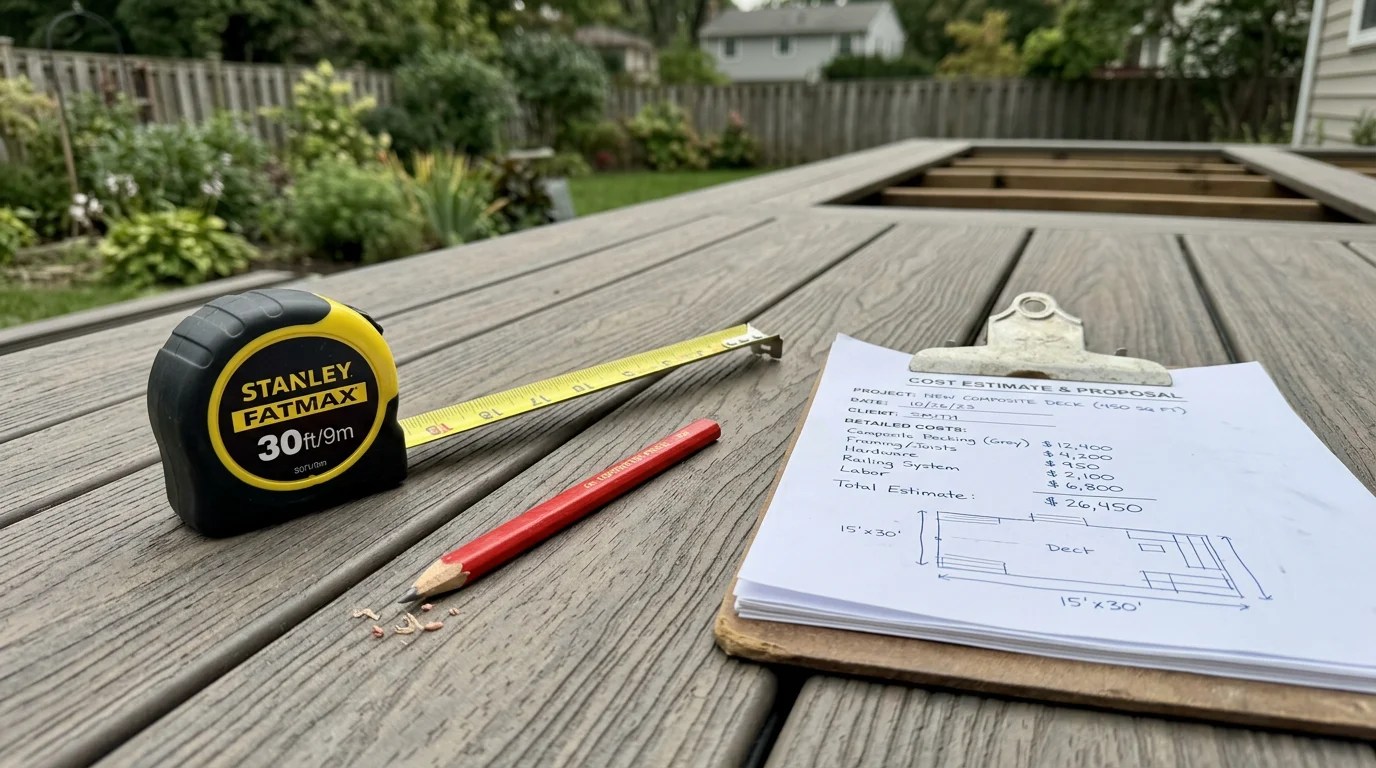
You're planning a composite deck and wondering if the premium price is worth it. Most composite decking lasts 25 to 50 years in Ontario — two to four times longer than pressure-treated wood — but the actual lifespan depends on the brand, installation quality, and how well you maintain it through freeze-thaw cycles.
Here's what determines how long your composite deck will actually last in Kitchener-Waterloo-Cambridge's climate.
Why Composite Decks Last Longer Than Wood in Ontario
Ontario's freeze-thaw cycles destroy wood decks. Water seeps into the grain, freezes, expands, and cracks the boards. Composite materials resist this because they don't absorb water the same way.
🏗️ Planning a deck project?
Get a free manual project review, or visualize your dream deck with AI before requesting quotes.
Composite deck boards are made from:
- 50-95% recycled wood fiber (sawdust, wood chips)
- 5-50% plastic polymer (HDPE or PVC)
- UV stabilizers and colorants
The plastic encapsulates the wood fiber, preventing moisture penetration. Premium brands use a full plastic cap around all four sides of the board. Budget composites often have exposed wood fiber on the bottom and sides — those spots can absorb moisture and degrade faster.
In Ontario's climate, expect these lifespans:
| Material | Expected Lifespan | Replacement Frequency |
|----------|-------------------|----------------------|
| Pressure-treated wood | 10-15 years | 3-4 times over 50 years |
| Cedar | 15-20 years | 2-3 times over 50 years |
| Uncapped composite | 15-25 years | 2 times over 50 years |
| Capped composite | 25-35 years | 1-2 times over 50 years |
| Premium PVC/composite | 40-50 years | Once, maybe |
The upfront cost difference between composite and wood narrows significantly when you factor in replacement costs.
What Actually Wears Out on a Composite Deck
Composite decking doesn't rot like wood, but it still ages. Here's what fails first:
Fading and Color Shift
All composite decking fades — usually 10-20% in the first two years, then stabilizes. Budget brands can lose 30-40% of their original color. Premium capped composites like Trex Transcend or TimberTech AZEK fade less than 10%.
Ontario's winters are less damaging than summer UV exposure. If your deck faces south or west, expect more fading.
Surface Scratching and Scuffing
Composite is softer than hardwood. Moving patio furniture, pets with claws, and dropped tools leave marks. Capped composite boards resist scratching better because the cap layer is harder than the core.
Uncapped composites show scratches and scuffs within 2-3 years of moderate use. Capped boards hold up 5-10 years before visible wear.
Expansion and Contraction
Composite boards expand and contract with temperature swings — more than wood. Ontario sees temperature ranges from -25°C to +35°C, a 60-degree swing that can cause:
- Gapping in winter (boards shrink)
- Tight seams or buckling in summer (boards expand)
- Fastener popping if installed without proper gaps
Installers in KWC need to follow manufacturer gapping specs. Most composites require 3-5mm gaps between boards in moderate temperatures. Install in winter with tighter gaps; install in summer with wider gaps.
Learn more about deck board spacing in Ontario's climate.
Mold and Mildew Growth
Composite doesn't rot, but it can grow surface mold in shaded areas with poor airflow. The wood fiber in composite provides nutrients for mold, especially on uncapped boards.
Expect mold on:
- North-facing decks under tree cover
- Boards installed without proper ventilation underneath
- Areas where leaves and debris accumulate
Annual cleaning prevents buildup. See our guide on composite deck maintenance in Ontario.
How Brand and Quality Affect Lifespan
Not all composite is created equal. Here's how the major brands sold in Canada stack up:
Premium Tier (30-50 Year Lifespan)
Trex Transcend and TimberTech AZEK are the gold standard. Full polymer cap on all sides, best fade resistance, strongest warranties. Expect 40-50 years with normal care in Ontario.
- Trex Transcend: 25-year residential warranty covering fade, stain, and structural issues
- TimberTech AZEK: 50-year warranty, made in USA
- Cost installed in KWC: $85-95/sqft
Read our full Trex decking review for Ontario homeowners.
Mid-Tier (25-35 Year Lifespan)
Trex Enhance, TimberTech Pro, and Fiberon Horizon offer partial capping (top and sides, but not bottom). Good fade resistance, decent warranties.
- Trex Enhance: 25-year limited warranty
- TimberTech Pro: 25-year warranty
- Fiberon Horizon: 25-year warranty
- Cost installed in KWC: $70-85/sqft
These are the sweet spot for most Ontario homeowners — good durability without premium pricing.
Budget Tier (15-25 Year Lifespan)
Trex Select and uncapped composites from big-box stores (Veranda, MoistureShield Basic). Thinner or no cap layer, more visible fading, shorter warranties.
- Trex Select: 25-year warranty but less fade protection
- Generic brands: 10-15 year limited warranties
- Cost installed in KWC: $65-75/sqft
Budget composites still outlast pressure-treated wood, but they'll look worn by year 10-12.
Check out our best composite decking in Canada comparison for more details.
Installation Quality Matters More Than the Product
Even premium composite fails early if installed incorrectly. In Ontario, poor installation causes:
Inadequate Airflow Under the Deck
Composite needs ventilation to prevent moisture buildup underneath. Decks less than 18 inches off the ground trap moisture, leading to mold growth and board warping.
Your builder should:
- Leave 6-12 inches clearance under the deck
- Avoid solid skirting that blocks airflow
- Install deck skirting with ventilation
Wrong Fasteners or Improper Gapping
Composite boards must float on the frame — they expand and contract too much to be rigidly fastened like wood. Hidden fasteners or screws driven through slotted holes allow movement.
Builders who treat composite like wood create problems:
- Screws driven too tight crack boards during expansion
- Insufficient gaps cause buckling in summer heat
- Steel fasteners instead of stainless rust and stain boards
Good installers follow manufacturer specs exactly. Bad installers wing it.
Structural Framing Shortcuts
Composite is heavier than wood — about 60% more weight per square foot. The framing needs to handle this. Ontario Building Code requirements apply to the structure, not just the deck boards.
If your framing fails at year 15, the composite boards don't matter. Make sure your builder:
- Uses proper joist spacing (12" or 16" on center, depending on board orientation)
- Installs joist tape or membrane to protect wood framing
- Attaches the ledger board correctly to prevent ledger board rot
Get these details in your deck builder contract before work starts.
Maintenance That Extends Composite Deck Life
Composite is low-maintenance, not no-maintenance. Do this to hit the upper end of the lifespan range:
Annual Cleaning (Spring)
Remove winter salt, dirt, and pollen that can stain composite surfaces. Use:
- Mild dish soap and water for routine cleaning
- Composite deck cleaner (oxygen bleach-based) for mold or stains
- Soft-bristle brush — never a wire brush
Pressure washing works if you keep the pressure under 1,500 PSI and hold the nozzle 12+ inches from the surface. High pressure damages the cap layer.
Snow and Ice Removal (Winter)
Don't use metal shovels or ice chippers — they gouge composite. Use:
- Plastic snow shovels
- Calcium chloride ice melt (not rock salt, which can discolor boards)
- Rubber mats in high-traffic areas to protect the surface
See our winter deck care guide for Ontario-specific tips.
Furniture Pads and Protective Measures
Prevent scratches by:
- Adding felt pads under furniture legs
- Using outdoor rugs in high-traffic zones
- Trimming pet nails regularly
- Lifting (not dragging) heavy items
Inspection and Minor Repairs
Once a year, check for:
- Loose fasteners that need tightening
- Popped boards caused by improper gapping
- Damaged railings or loose posts
- Standing water that indicates drainage problems
Catch small issues before they become expensive repairs.
Real-World Lifespan in KWC Climate
Ontario's freeze-thaw cycles are tough on outdoor materials, but composite handles it better than wood. Here's what you'll actually see:
Years 1-5: Minimal wear. Some initial fading (10-15% on capped boards, 20-30% on uncapped). Surface stays smooth. Looks nearly new.
Years 5-15: Gradual fading stabilizes. Minor scratches and scuffs appear in high-traffic areas. Mold may develop on shaded sections if not cleaned. Capped composite still looks good; uncapped shows more wear.
Years 15-25: Visible aging on budget composites — faded color, surface scratches, possible board warping if poorly installed. Premium capped composites still perform well with routine maintenance.
Years 25-35: Premium boards (Trex Transcend, TimberTech AZEK) are holding strong. Mid-tier boards may need partial replacement in high-wear areas. Budget composites are likely past their useful life.
Years 35-50: Only the best products and best installations make it this far. Even then, you'll probably want to replace for aesthetic reasons before structural failure.
Compare this to pressure-treated wood, which needs staining every 2-3 years and starts rotting by year 10-12 in Ontario.
Cost Per Year: Composite vs. Wood
Let's run the numbers for a 300-square-foot deck in Kitchener-Waterloo:
Pressure-Treated Wood
- Initial cost: $13,500-19,500 ($45-65/sqft installed)
- Lifespan: 12 years
- Maintenance: Stain every 3 years at $600-900
- Total 30-year cost: $27,000-39,000 (2 rebuilds + maintenance)
- Cost per year: $900-1,300
Mid-Tier Composite (Trex Enhance, TimberTech Pro)
- Initial cost: $21,000-25,500 ($70-85/sqft installed)
- Lifespan: 30 years
- Maintenance: Annual cleaning, $0-150 DIY
- Total 30-year cost: $21,000-25,500
- Cost per year: $700-850
Premium Composite (Trex Transcend, TimberTech AZEK)
- Initial cost: $25,500-28,500 ($85-95/sqft installed)
- Lifespan: 40+ years
- Maintenance: Annual cleaning, $0-150 DIY
- Total 40-year cost: $25,500-28,500
- Cost per year: $640-710
Composite wins on total cost of ownership, even before you factor in your time spent staining wood decks. For a comprehensive deck cost breakdown, see our full Ontario pricing guide.
For current KWC pricing, see our guides:
When to Replace Instead of Repair
Even composite decks eventually need replacement. Consider replacement when:
- Boards are warping or cupping across multiple sections (sign of poor installation or end-of-life)
- Structural framing is failing (rotted joists, loose ledger board)
- Fading exceeds 40-50% and the deck looks shabby
- Mold returns within weeks of cleaning (indicates moisture issues)
- Fasteners are popping repeatedly (expansion/contraction has compromised attachment)
Sometimes the framing fails before the boards. If your composite boards are fine but the structure underneath is failing, you can rebuild the frame and reuse the boards if they're in good shape.
Common Questions
Do composite decks last longer in covered areas?
Yes. Covered composite decks can last 50+ years because they're protected from UV exposure and precipitation. The biggest longevity threat is UV degradation, so a roof or pergola significantly extends lifespan. However, covered decks still need ventilation to prevent moisture buildup underneath.
Can you extend the life of a composite deck with sealant or stain?
No. Never seal or stain composite decking — it voids the warranty and traps moisture in the boards, causing premature failure. Composite is designed to be left as-is. If you want to restore faded color, some manufacturers sell composite deck "refinishers," but results are mixed.
How long do composite deck railings last compared to the boards?
Composite railings last 20-30 years, often slightly less than the decking itself because railings have more joints, fasteners, and stress points. Aluminum or vinyl railings can outlast composite boards. If you're building for maximum longevity, pair premium composite decking with aluminum railings.
Does snow and ice damage composite decking faster?
Not really. Snow and ice don't damage composite boards as long as you remove them with plastic shovels and use calcium chloride ice melt (not rock salt). The freeze-thaw cycle affects composite far less than wood because composite doesn't absorb water. Summer UV exposure is actually more damaging to composite than winter weather in Ontario.
What fails first on a composite deck — the boards or the structure?
Usually the structure fails first, especially if the builder didn't use joist tape or a protective membrane on the framing. Pressure-treated joists and beams can rot after 15-20 years, while premium composite boards keep going. This is why joist tape and proper flashing matter — they protect the investment you made in long-lasting deck boards.
Related guides (to choose material + maintenance)
If you’re getting quotes or deciding scope, these guides remove the biggest unknowns:
- Cedar vs composite decking (Ontario)
- Composite screws vs clips
- Ontario deck cost calculator
- Deck quote line items (Ontario)
- Pressure-treated deck lifespan (Ontario)
🎨 Not sure which material to pick?
Upload a photo of your backyard and see exactly how Trex, TimberTech, or cedar would look — free and instant.
Want a fast, comparable quote from 3 deck builders?
- Get quotes here: Get a deck quote
Upload a backyard photo and preview real decking materials with AI — free, instant, no sign-up.
Permits, costs, material comparisons, and questions to ask before requesting quotes — delivered to your inbox.