
Fire Pit on a Deck in Ontario (2026)
Can you put a fire pit on your deck in Ontario? Safety rules, building code requirements, and practical setup ideas for KWC homeowners.
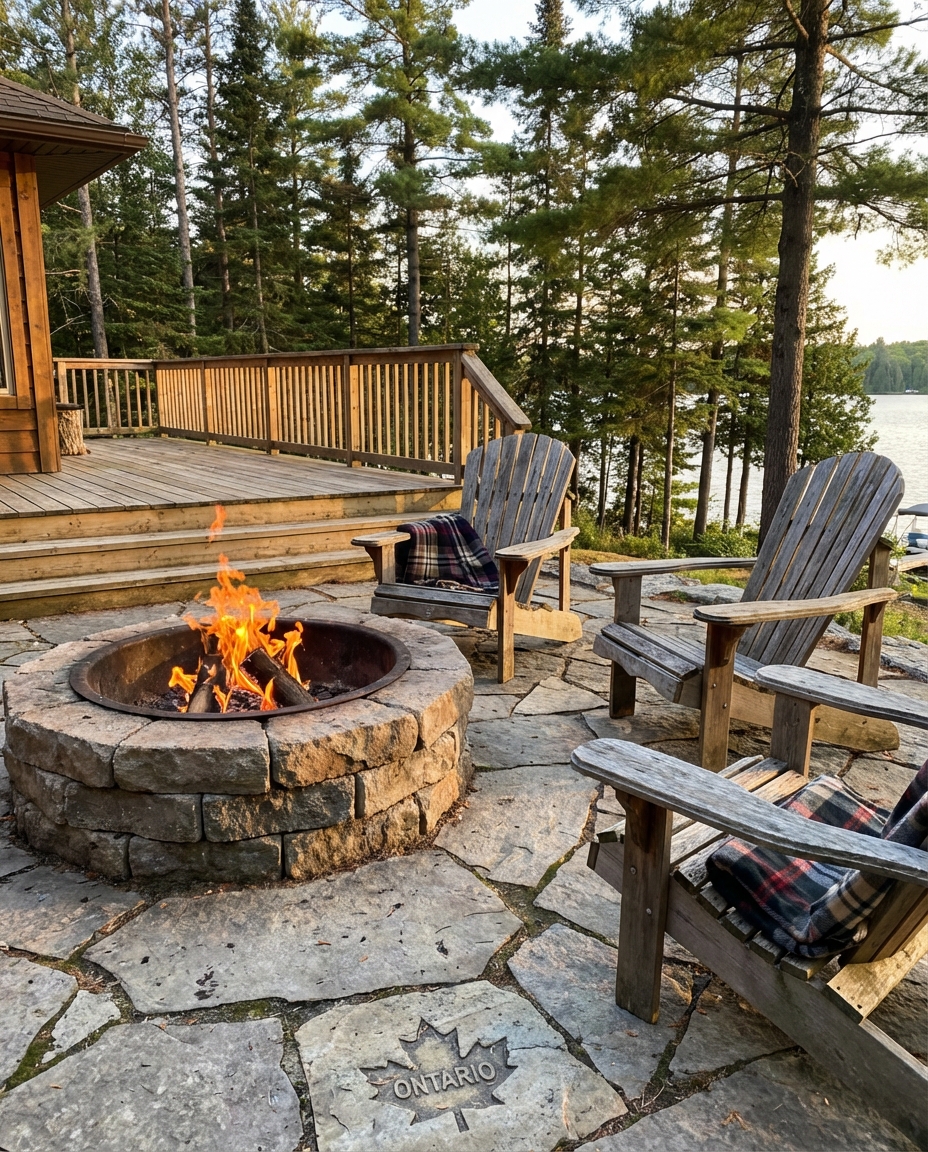
You want to add a fire pit to your deck, but you're not sure if it's allowed or safe. The short answer: yes, you can have a fire pit on your deck in Ontario, but there are strict safety requirements and local bylaw restrictions you need to follow.
Here's what Ontario homeowners need to know about deck fire pits in 2026.
Ontario Building Code and Fire Pit Requirements
The Ontario Building Code doesn't specifically prohibit fire pits on decks, but it does set combustible material clearance requirements that effectively determine what you can use.
🏗️ Planning a deck project?
Get a free manual project review, or visualize your dream deck with AI before requesting quotes.
Key OBC requirements:
- Minimum 900 mm (36 inches) clearance from combustible materials to open flames
- Non-combustible surface directly under and around the fire pit
- Proper ventilation — enclosed spaces with fire pits need engineered ventilation systems
- Guardrail clearances — flames cannot be within 900 mm of wood railings without heat shielding
For most wood or composite decks, this means you're limited to gas fire pits with controlled flames or propane fire tables where the flame height and heat output are manageable. Traditional wood-burning fire pits generate too much heat and flying embers for safe deck use.
Local Bylaw Rules in Kitchener, Waterloo, and Cambridge
Each KWC municipality has its own outdoor fire regulations that layer on top of the OBC requirements.
Kitchener Fire Pit Bylaws
- Wood-burning fire pits prohibited on decks, balconies, and rooftops
- Gas and propane fire pits allowed on decks if they meet manufacturer clearances
- Minimum 3 metres (10 feet) from property lines for any outdoor fire
- Must have adequate fire suppression (garden hose, extinguisher) within reach
Waterloo Fire Pit Bylaws
- Open-flame wood burning not permitted on decks or balconies
- Gas and propane appliances allowed if CSA-approved and used per manufacturer specs
- Minimum 3 metres from structures and combustible materials
- Cannot create smoke, odour, or particulate matter that causes a nuisance
Cambridge Fire Pit Bylaws
- Wood-burning fires prohibited on decks, patios, and balconies
- Propane/natural gas fire appliances permitted if manufacturer-approved for deck use
- Minimum 3 metres from lot lines and neighbouring properties
- Active fire supervision required — cannot leave unattended
Bottom line for KWC: Wood-burning fire pits are banned on decks. Gas or propane fire pits are allowed if you follow clearances and manufacturer guidelines.
If you're planning a deck build and want to include a fire pit from the start, check deck permits in Kitchener, Waterloo, or Cambridge to understand the approval process.
Safe Fire Pit Options for Ontario Decks
Not all fire pits are safe for deck use. Here's what works and what doesn't.
Gas and Propane Fire Pits (Recommended)
Propane fire tables and natural gas fire bowls are the safest options for Ontario decks. They produce controlled flames, no embers, and minimal heat radiation to the deck surface.
Typical specs:
- BTU output: 30,000–50,000 BTU for residential fire tables
- Fuel source: 20 lb propane tank or natural gas line
- Clearances: 24–36 inches from combustibles (check your specific model)
- Base requirement: Fire-rated mat or non-combustible paver base
- Cost: $400–$2,000 for quality CSA-approved units
Why they work: Controllable flame height, instant shut-off, no spark or ember risk, and consistent heat output.
Wood-Burning Fire Pits (Not Recommended for Decks)
Traditional wood-burning fire pits are not safe on decks and are explicitly banned by KWC municipal bylaws.
Why they're prohibited:
- Embers and sparks can ignite decking boards
- Uncontrolled flame height exceeds clearance requirements
- Heat radiation can warp, char, or ignite composite and wood decking
- Ash and residue damage deck finishes
If you want a wood-burning fire pit, install it on a ground-level patio with a non-combustible base at least 3 metres from your deck.
Ethanol and Gel Fuel Fire Pits
Tabletop ethanol burners are a middle-ground option — portable, no gas line required, and produce real flames.
Considerations:
- Lower heat output than propane (typically 5,000–10,000 BTU)
- Still requires non-combustible base mat
- Fuel canisters need safe storage away from heat sources
- Cost: $150–$600 for quality models
Ethanol fire pits are better suited for ambiance than warmth. They're safe for decks if you follow manufacturer clearances and use a heat shield underneath.
Fire Pit Safety Setup on Your Deck
Even with an approved gas or propane fire pit, you need to set it up correctly.
Non-Combustible Base Layer
Place a fire-rated deck mat or non-combustible base under your fire pit to protect the decking surface.
Options:
- Fire-resistant deck mats: $50–$150, rated for high heat exposure
- Concrete pavers or stone tiles: $3–$8/sqft, create a permanent fire pit zone
- Metal heat shields: Custom fabricated, provides maximum protection
The base should extend at least 12 inches beyond the fire pit on all sides.
Clearance Zones
Measure and maintain proper clearances:
- 36 inches minimum from railings, pergola posts, furniture, and walls
- 3 metres (10 feet) from property lines and neighbouring structures
- Clear overhead space — no tree branches, awnings, or roof overhangs within 10 feet above
If your deck doesn't have enough clearance space, your fire pit setup won't meet code. Consider a smaller propane fire table or relocate to a ground-level patio.
Fire Suppression Equipment
Keep fire suppression tools within 10 feet of your fire pit:
- Garden hose connected and ready
- Fire extinguisher rated for Class A/B fires (minimum 5 lb)
- Fire blanket for smothering small flare-ups
Ontario fire departments recommend having two methods of suppression on hand whenever a fire pit is in use.
Deck Material Considerations
Your decking material affects how much heat it can withstand.
Composite Decking and Fire Pits
Most composite decking brands (Trex, TimberTech, Fiberon) can handle propane fire pits if you use a proper base mat. Composite boards soften at 180–200°F and can warp or discolour from prolonged heat exposure.
Recommendations:
- Use a thermal barrier mat rated for 500°F+
- Choose fire pits with enclosed bases (not open-bottom designs)
- Avoid placing fire pits near deck seams or end cuts where heat can penetrate faster
For more on composite deck care, see our guide to composite deck maintenance in Ontario.
Wood Decking and Fire Pits
Pressure-treated and cedar decks are more vulnerable to heat damage than composite. Wood can char at 300–400°F and ignite at sustained exposure above 500°F.
Protective measures:
- Double-layer heat shield: stone pavers on top of a metal heat barrier
- Elevate the fire pit on non-combustible feet to allow airflow underneath
- Inspect the deck surface regularly for scorch marks or discolouration
If you're building a new deck and plan to add a fire pit, consider using composite decking for better heat resistance.
Rooftop and Elevated Decks
Second-storey decks and rooftop decks have additional fire safety concerns:
- Wind exposure increases flame unpredictability
- Evacuation routes are limited in case of fire
- Structural load capacity must support fire pit weight (especially stone or concrete units)
Many insurance providers require written approval before allowing fire pits on elevated decks. Check your policy before installation.
If you're planning a second-storey deck, review low deck vs elevated deck considerations.
Fire Pit Design Ideas for Ontario Decks
Here are practical ways to integrate a fire pit into your deck layout.
Sunken Fire Pit Zone
Create a recessed seating area with the fire pit at the centre. This lowers the flame height relative to railings and creates natural wind protection.
Design elements:
- Built-in bench seating around the perimeter (maintains 36-inch clearance)
- Stone or tile inlay flooring in the fire pit zone
- Step-down access from the main deck level
This works best on large decks (300+ sqft) where you can dedicate 80–120 sqft to the fire pit area.
Corner Fire Table Setup
Position a propane fire table in a corner of your deck with open sides facing the seating area. This maximizes usable space while keeping combustibles at a safe distance.
Layout tips:
- Place the fire table 3–4 feet from corner railings
- Use outdoor sectional furniture to define the conversation zone
- Add string lights or post cap lighting for ambiance
Works well on medium decks (150–250 sqft) where space is limited.
Portable Fire Pit Station
Use a lightweight propane fire pit (20–40 lbs) that you can move and store when not in use.
Benefits:
- Flexibility to reposition based on wind direction
- Easy storage during winter months
- Lower cost than permanent installations ($200–$600)
This is the best option for renters or homeowners who want fire pit functionality without permanent deck modifications.
If you're planning to add fire pit lighting, check our guide on deck lighting ideas in Ontario.
Insurance and Liability Considerations
Before installing a fire pit, contact your home insurance provider to confirm coverage.
Key questions to ask:
- Does my policy cover fire pit use on my deck?
- Are there restrictions on fuel type (propane vs wood)?
- Do I need additional liability coverage?
- Are there installation or clearance requirements for coverage?
Some insurers increase premiums for homes with deck fire pits or require proof of CSA-approved equipment and proper installation. Failure to disclose a fire pit can void coverage in case of fire damage.
🎨 Not sure which material to pick?
Upload a photo of your backyard and see exactly how Trex, TimberTech, or cedar would look — free and instant.
Common Questions
Can I use a wood-burning fire pit on my deck in Ontario?
No. Wood-burning fire pits are prohibited on decks in Kitchener, Waterloo, and Cambridge due to ember risk and uncontrolled flame height. Gas and propane fire pits are allowed if they meet manufacturer clearances and local bylaws.
How much clearance do I need around a fire pit on my deck?
The Ontario Building Code requires 900 mm (36 inches) minimum clearance from open flames to combustible materials. Your specific fire pit may require more — always follow the manufacturer's clearance specifications. You also need 3 metres (10 feet) from property lines per KWC municipal bylaws.
Do I need a permit to install a fire pit on my deck in KWC?
No separate permit is required for portable propane or gas fire pits used according to manufacturer instructions. If you're installing a permanent natural gas fire pit with a gas line connection, you need a gas permit from your municipality (approximately $150–$300). If the fire pit installation involves structural deck modifications, a building permit may be required — check with your local building department.
What should I put under a fire pit on a composite deck?
Use a fire-rated deck mat or non-combustible base layer (concrete pavers, stone tiles, or metal heat shield) that extends at least 12 inches beyond the fire pit on all sides. This protects composite decking from heat damage, which can occur at temperatures above 180°F. Never place a fire pit directly on composite decking without thermal protection.
Can I leave my fire pit on my deck year-round in Ontario?
You can leave a gas or propane fire pit on your deck year-round if it's weatherproof, but it's better to store it during winter. Ontario's freeze-thaw cycles, snow accumulation, and salt exposure can damage fire pit components and control valves. Disconnect propane tanks and store them upright in a well-ventilated outdoor area away from the house. For winter deck care tips, see our guide to winter deck maintenance in Ontario.
Upload a backyard photo and preview real decking materials with AI — free, instant, no sign-up.
Permits, costs, material comparisons, and questions to ask before requesting quotes — delivered to your inbox.