
Who Is Responsible for Getting the Deck Permit in Ontario?
Deck permit responsibility in Ontario: who applies, who pays, what contractors must do. Homeowner vs builder obligations explained for KWC projects.
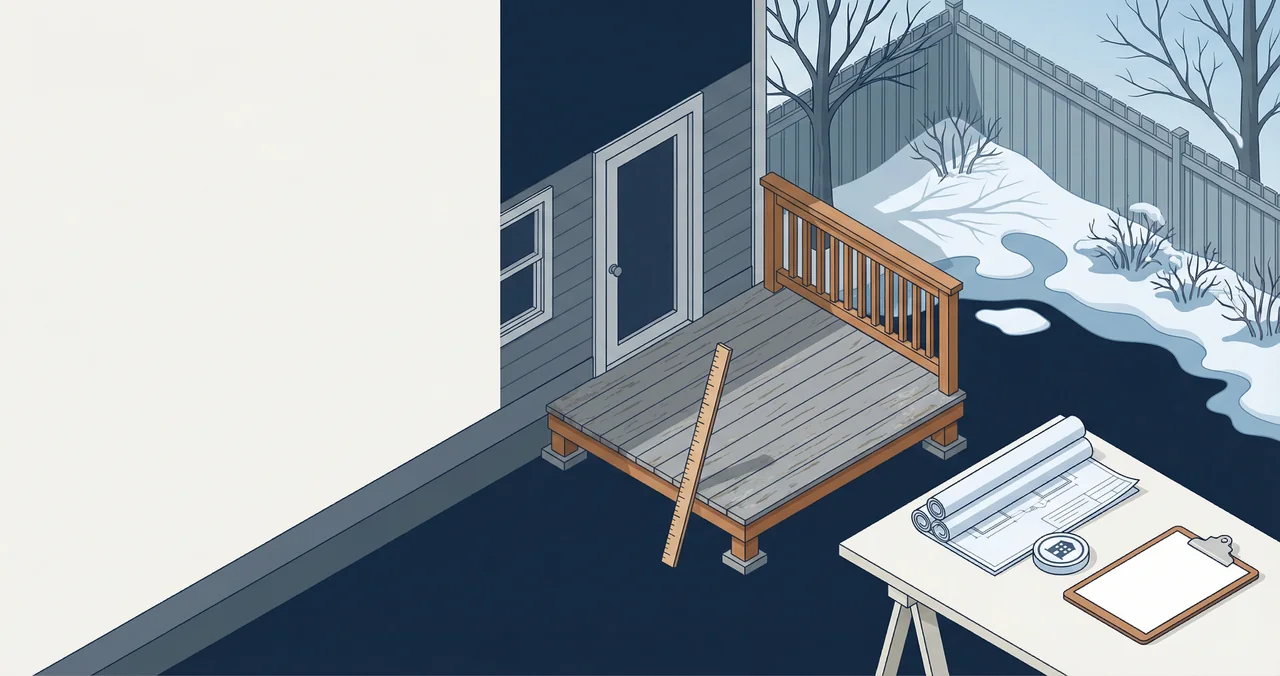
The short answer: You, the homeowner, are legally responsible for obtaining the deck permit in Ontario — even if you hire a contractor to build it.
That said, most professional deck builders will handle the permit application on your behalf as part of their service. But the permit is always issued in the homeowner's name, and you're ultimately accountable if something goes wrong.
Here's what that means in practice, who does what, and how to protect yourself.
How Deck Permit Responsibility Works in Ontario
Under the Ontario Building Code, the property owner is responsible for ensuring any construction complies with local building codes and bylaws. When you build a deck, you're required to:
🏗️ Planning a deck project?
Get a free manual project review, or visualize your dream deck with AI before requesting quotes.
- Apply for a building permit before construction starts
- Ensure the work meets OBC and municipal requirements
- Allow inspections at required stages
- Keep the approved permit posted on-site during construction
Even if you pay a contractor to handle everything, the permit stays in your name. If the deck fails inspection, lacks proper footings, or violates setback rules, you — not the builder — are on the hook with the municipality.
This is why choosing a contractor who knows deck permits in Kitchener, Waterloo, or Cambridge matters so much.
What Most Deck Builders Will Do (and What You Should Expect)
Professional deck contractors in KWC typically include permit application in their service. Here's the standard process:
Before you sign the contract:
- The builder inspects your property and measures for setbacks, easements, and grading
- They confirm whether a permit is required (usually yes, unless you're building a ground-level deck under 24 inches in specific municipalities)
- They quote you a project price that may or may not include the permit fee — see what to expect for deck costs in Ontario so you know what's reasonable
After you sign:
- The builder prepares permit drawings (site plan, framing plan, cross-sections)
- They submit the application to your municipality on your behalf
- They pay the permit fee upfront (usually $150-400 depending on city and deck size) and either bill you separately or include it in the total
- They coordinate inspections with the building department during construction
During construction:
- The builder schedules and attends mandatory inspections (typically footing, framing, and final)
- They make any corrections required by the inspector
- They ensure the permit placard stays posted on-site
In this scenario, you're still the legal permit holder, but the contractor handles all the legwork.
When You're Responsible for the Permit Yourself
If you're building the deck yourself or hiring a handyman who doesn't offer permit services, you'll need to:
1. Prepare the drawings — Site plan showing property lines, setbacks, deck dimensions, and footing locations. Framing plan showing joist sizes, spans, beam sizes, and post locations. Many municipalities provide templates.
2. Submit the application — Visit your city's building department (online or in person) with drawings, a completed application form, and payment. Permit costs in KWC range from $150-400.
3. Schedule inspections — You'll need to call for inspections at specific stages. Missing an inspection or covering work before it's approved can result in fines or a stop-work order.
4. Understand code requirements — You're responsible for knowing footing depth (48 inches minimum for frost protection), railing height (42 inches), stair dimensions, and ledger board attachment methods.
This route saves you the contractor's markup on permit services, but it requires time, knowledge, and availability to meet inspectors during business hours.
What to Include in Your Contractor Agreement
Whether your builder "handles the permit" or not, get it in writing. Your deck builder contract should specify:
- Who submits the permit application — contractor or homeowner
- Who pays the permit fee — and whether it's included in the quote or billed separately
- Who schedules and attends inspections — and what happens if the inspector requires changes
- Who is responsible for corrections — if the deck fails an inspection, who pays for the fix?
- Timeline impact — how long the builder expects the permit approval to take (usually 2-4 weeks in KWC, but can vary)
If a contractor says "we'll skip the permit" or "we'll apply after the deck is built," walk away. That's a massive red flag.
What Happens If You Skip the Permit
Some homeowners consider skipping the permit to save time or money. Bad idea.
Risks include:
- Fines — Municipalities can issue fines of $500-$5,000+ for unpermitted construction
- Stop-work orders — If a neighbor reports you, the city can force you to halt construction and apply retroactively
- Insurance denial — If your deck collapses or causes injury, your home insurance may refuse to cover it
- Resale issues — When you sell, the buyer's lawyer or home inspector will ask for the permit. No permit means no sale, or a price reduction to cover "legalization" costs
- Deck removal — In extreme cases, municipalities can order you to tear down an unpermitted deck
Even if you hire a contractor who says they'll "handle it," you're liable. Always verify the permit is submitted before construction starts.
How to Verify Your Permit Was Actually Submitted
Shady contractors sometimes promise to pull a permit, pocket the fee, and never file. Protect yourself:
1. Ask for the permit number — Once submitted, the municipality assigns a tracking number. Ask your contractor for it.
2. Check the city's permit portal — Kitchener, Waterloo, and Cambridge all have online portals where you can search by address and see active permits.
3. Request a copy of the approved permit — Your contractor should give you a copy of the stamped permit drawings before starting work.
4. Look for the permit placard on-site — Ontario law requires the permit to be posted visibly during construction. If you don't see it, ask why.
5. Confirm inspections were passed — After construction, request copies of the inspection reports showing footing, framing, and final sign-off.
If your contractor resists providing any of this, consider it a warning sign.
DIY Deck Permits: What You Need to Know
Building your own deck and pulling your own permit is legal and common, but you'll need to meet the same standards as a professional builder.
Key requirements:
- Engineered drawings may be required — For elevated decks over 6 feet high, second-story decks, or helical pile foundations, you may need a structural engineer's stamp ($500-$1,500).
- Call before you dig — Ontario One Call (811) must locate underground utilities before you excavate for footings. It's free and mandatory.
- Follow joist span tables — Your joist sizing must match OBC tables based on species, spacing, and span.
- Schedule inspections in advance — Inspectors have busy schedules. Call at least 48 hours ahead, and don't cover any work until it's approved.
Many homeowners start a DIY permit application, realize the complexity, and end up hiring a contractor mid-process. That's fine — just ensure the contractor is willing to take over an in-progress permit.
Special Cases: Condos, Heritage Properties, and HOAs
Condominiums:
You'll need approval from the condo board before applying for a municipal permit. Many condos restrict or prohibit deck construction entirely, especially if it affects common elements or exterior appearance.
Heritage properties:
If your home is designated under the Ontario Heritage Act, you'll need heritage approval in addition to a building permit. This adds time and restrictions to the project.
Homeowner associations (HOAs):
Some neighborhoods have architectural control committees that must approve deck plans before you can proceed. Check your subdivision covenants.
In all three cases, you're responsible for securing these approvals — even if a contractor handles the municipal permit.
Cost Breakdown: Who Pays for What?
Here's how permit-related costs typically break down in a contractor-managed project:
| Item | Cost (2026 KWC) | Who Usually Pays |
|------|-----------------|------------------|
| Municipal permit fee | $150-400 | Homeowner (billed by contractor or paid directly) |
| Permit drawing preparation | Included in quote or $200-500 | Homeowner (via contractor's fee) |
| Engineer's stamp (if required) | $500-$1,500 | Homeowner |
| Site plan survey (if needed) | $300-$800 | Homeowner |
| Inspection re-visit fees (if work fails) | $100-200 per visit | Depends on contract terms |
Most contractors include drawing prep in their base price but bill the permit fee separately. Always ask upfront how these costs are handled.
🎨 Not sure which material to pick?
Upload a photo of your backyard and see exactly how Trex, TimberTech, or cedar would look — free and instant.
Common Questions
Can I get a deck permit after the deck is already built?
Yes, but it's called a "retroactive permit" and it's more expensive and complicated. Municipalities may require you to expose buried footings for inspection, provide engineer's reports, or even partially disassemble the deck. Fines may also apply. It's always cheaper and easier to get the permit first.
What if my contractor doesn't show up for the inspection?
This is a problem. Most contracts specify that the contractor must attend all inspections. If they don't, you'll need to reschedule (which delays the project) and may need to be present yourself. If the inspector finds issues and the contractor isn't there to discuss solutions, you could face a failed inspection and re-inspection fees.
Do I need a permit if the deck is replacing an old one?
Usually yes. Deck replacement is considered new construction and requires a permit, even if you're reusing the same footings. The only exception is minor repairs like replacing a few deck boards or railing sections, which typically don't require permits.
Who is liable if the deck collapses after it passes inspection?
Complicated question. If the deck was built to code and passed all inspections, liability often falls on the contractor if there was a construction defect. If the collapse was due to improper maintenance or overloading, it's on the homeowner. If the inspector missed a major code violation, the municipality might share liability. This is why contractor insurance and proper contracts with warranty terms matter.
Can a homeowner pull a permit for a contractor?
Yes, but most contractors won't work under a homeowner-pulled permit. If something goes wrong, the contractor's insurance may not cover it, and they lose control over the inspection process. Professional builders prefer to pull their own permits because it protects them and ensures they're accountable for the work.
Upload a backyard photo and preview real decking materials with AI — free, instant, no sign-up.
Permits, costs, material comparisons, and questions to ask before requesting quotes — delivered to your inbox.